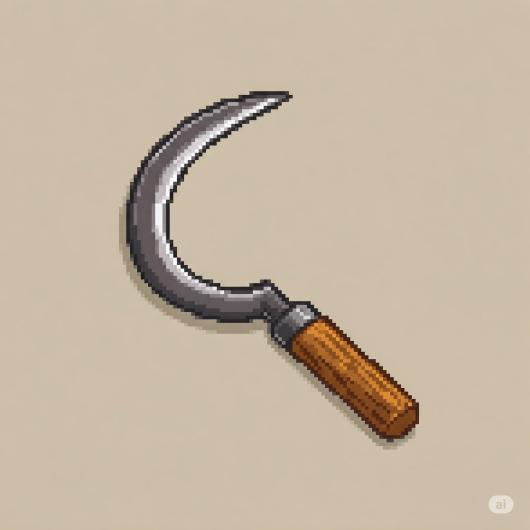
Of the 332 bronze artifacts with working edges excavated from Yin hsü, 317 are weapons and only fifteen are classifiable as tools; the latter were all wood-working not farming implements. On the other hand, huge quantities of slate knives were unearthed, and these – the so-called Hsiao-t’un stone knives – were reasonably regarded as harvesting knives or sickles.1
We should be skeptical of any claim that an artifact is a “weapon” merely based on its edge. The karambit (the hooked Malaysian blade) was probably not originally a weapon, but instead a harvesting sickle designed to be hidden from the view of the rice god. The nunchaku was for threshing wheat. The sais and trident were for farming. Even the chariot was, arguably, first for farming.
Bronze, almost universally, originates in ritual implements. In the Torah, bronze is specifically for holy coverings, not for weapons. The Incas used bronze specifically for ritual implements, not for weapons.
It’s possible that every “weapon” was first a farming implement or, more generally (and particularly in the case of the Shang dynasty), a sacrificial implement. It’s not a stretch to assume that swords and spears were first for sacrifice.
The only possible exception to this is the bow and arrow, but these seem to originate in hunting, and are soon after co-opted for warfare. It’s even possible that the bow was first a musical instrument, and was later secularized for hunting and warfare.
Generally, it’s a safe bet that everything humans make was originally for religion, language, or some other cultural form, and was later secularized for “beauty”, war, etc.2
Leave a Reply