
I just finished Lynn Thorndike’s History of Magic and Experimental Science, an 8-volume series with 5706 pages total (not including indices). I started reading it April 18, 2023 and got through three quarters of it in 8 months. I finished it today August 6, 2024 almost 8 months later. So on average, to finish this series I read 12 pages per day for 16 months.

Thorndike analyzes the study of magic, which we know was all the rage before the Enlightenment, but he shows that even during and after the Enlightenment, interest in magic never really went away. The works of great scientists like Roger Bacon, Copernicus, and even Isaac Newton demonstrate these thinkers’ fascination with occult virtues, astrology, alchemy, and all kinds of superstition.

Why did I read this? Because I’m writing a science book on violence, tentatively called “If These Fists Could Talk”. If there’s anything a scientist needs to be on the lookout for, it’s a bias for untestable claims. For example, L. Ron Hubbard believed that human souls called “thetans” (rhymes with “Satans”) were transplanted to earth via some galactic overlord named Xenu, and nuclear bombs made these thetans erupt from volcanoes and seek shelter in ape bodies, which became people, or something. Hubbard explains human aggression as the trauma experienced in the trillion+ year lifespan of these thetans, and Scientology measures it with E-meters. While the use of “auditing” (talk therapy) using an E-meter is claimed to be scientific, 1) there is no way to falsify the claim that humans are made of thetans, and 2) the E-meters can be easily replaced with other (and less aggressive) means of simple talk therapy.
If you were to re-write a Scientology process using a more scientific method, you would instead show that auditing helps you process external “intents” which have remained in an unprocessed, emotional state. E-meters might be able to show how your body is processing these intents, but you would inevitably find the E-meter unnecessary, which would make it more difficult to track the metrics of Scientology, but would lend to a less aggressive and more truthful form of therapy. The same could be done with Catholic exorcism: paternosters and sacred symbols might aid in the upending of unprocessed intents and their identification, but the subject needs the tools to process future intent loads from foreign sources, and the Church has no clear utilities here: they simply say go to mass and whatnot.
This all ultimately devolves on my subject: violence. Every religion, philosophy, and science has some mystical formula for its resolution, and a sacred myth as to its origin. Darwinian evolution has failed on this front because it continues to assert that we acquire aggression from some kind of limbic process that has an old, evolutionary history that can be seen in primates. Our prefrontal cortex, the “newer” part of the brain, is believed to resolve this “limbic” aggression. And yet humans continually frustrate scientists with how violent and “irrational” we can be. The scientists assert that we must try to rely on this prefrontal region and all its linguistic capacities and “culture” and whatnot to resolve violence, and yet we continue to have violence. In fact, violence has become so “smart” that we can nuke the planet with the push of a button.
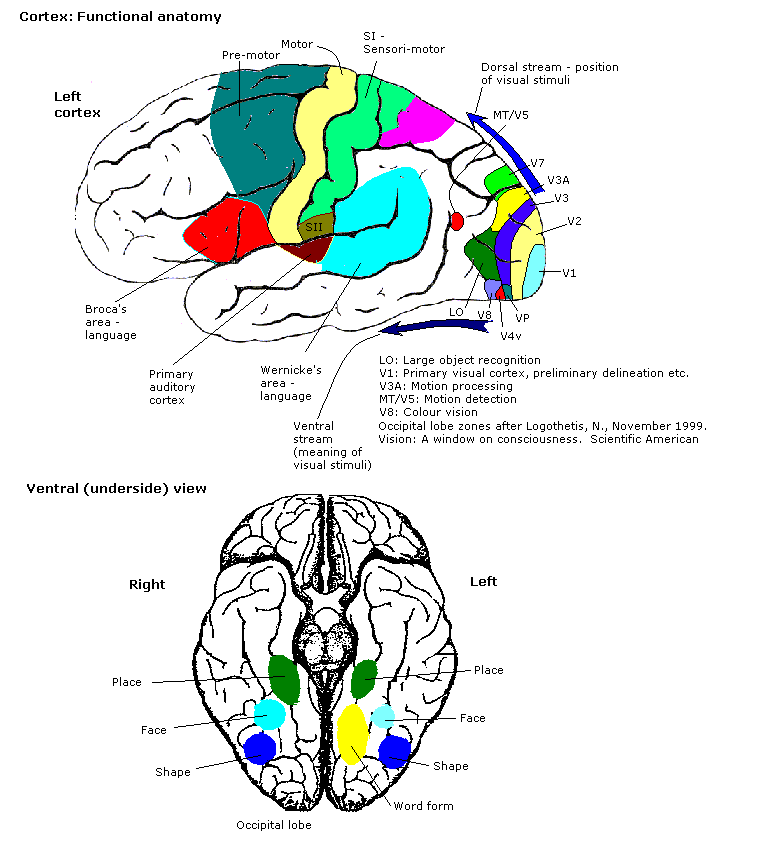
These scientists assert, on the one hand, that we must rely on our human faculties to resolve violence, and yet they then say that we are merely on some continuum with our primate “ancestors”.
So which one is it? Should we be “decent humans”? Or should we “humbly admit” that we’re just animals, or just “gene machines” like Richard Dawkins says, or just “space dust” as Neil deGrasse Tyson says? This is not science: it’s a philosophy, a religion even, which calls for us to put down our egos in the name of a lofty truth that says we are at once beautifully human, while also being merely animals and dirt.
Science can’t expect the average person to listen to this moralism. We experience each other through our eyes and ears. They experience us through microscopes, telescopes, and photon counters. We are living a human experience. They are doing something else. Let them do their thing, but let’s stop listening to them regarding violence. I would hope world leaders stop listening to them too. They have no idea what they’re talking about.
A far simpler explanation is this: humans are categorically different from animals. We have ROBA, recursive, object-based aggression, which makes aggression a wildcard, as opposed to animal aggression which is automatically known in combat. ROBA produces a black hole in human relations, which can only be mended, continually, with the use of language, which is like a topical cream applied to an amputated limb. The skin will continue to grow and seek the resolution to this hole in its organ, much as nails continually grow from the extremities of the fingers to seek the resolution to the holes at the end of our fingers, but just as nails and cream never stop the growth of skin, language can never entirely violence. It can only defer, permanently.
That’s why we need a science of violence and language, one which admits that violence is an *endemic* human condition, not something imposed due to ecological evolution. It is always happening. It will not disappear. All we can do is continue mending.
And so my Thorndike-like approach is this: a science of violence need not account for where humans came from, because we can’t learn how to resolve violence by studying primates; they don’t have the capacity to nuke the planet, so they don’t have the resolution to nuking the planet. Seeking aliens is equally pointless: it’s merely a religious hope for an external, messianic arbiter of justice. It demonstrates the total failure of the sciences to understand violence; Soviets and Americans sought aliens during the Cold War, in total vain, and we will continue this so long as we lose hope in our own ability to resolve things at home.
Human violence and language are both unique to humans, and both are merely different states of recursion. Violence is the active state of recursion, which can be transferred to language, its symbolic state, whereby violence is deferred. Violence is the best place to look to understand recursion; it’s simple and 100% human. There’s absolutely no need to seek it elsewhere, because *it doesn’t exist anywhere else*. That’s my entire book.
Don’t abandon hope!
Leave a Reply