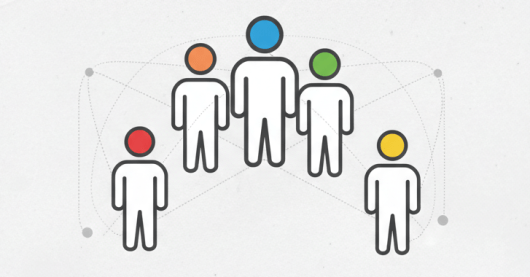
Recently I published my in-depth article on kinship. Shortly afterward I began reading Nelson Goodman’s Ways of Worldmaking (1978). Goodman’s hypothesis is that people create their own worlds through the use of language, and we verify these worlds through language. It recalled a discussion I had recently with a friend who’s an avid reader of Ayn Rand, where I made the case that, contra Rand, some people don’t think objectively, but relational-ly. I and my friend think objectively. In a meeting of five people, I observe there are five objects who fit into certain categories that have meaning to me such as people I know, people who are part of social group X, etc. So in addition to the 5 objects, there might be 4 or 5 categories as objects. The Object-thinker naturally wants to reduce the number of categories as much as possible—perhaps even going so far as saying “these people are all in the same category Y—but in total is dealing with 6-10 objects in the room.
Though I can’t speak directly for them, I’ve lived many years with some Relational-thinkers and have had to come to terms with how they think, and they perceive a very different situation. They perceive the relationships not only between the 5 people, but between all mixes of those relationships. A has a friendly relationship with B, B doesn’t know C, D is annoyed at E, etc. The total number of 2-person relationships is 10. But there are also 3-person relationships: A and B seem to be sussing out C, D and A are not agreeing about E, etc. The total number of 3-person relationships is also 10. There are also 4-person relationships: when A is excluded, BCDE seem not to have a leader; when B is excluded, ACDE seem to carry on, but when E is excluded there’s gossiping. There are 5 total 4-person relationships. And of course, there’s the relationship of all five at the same time. The total number of relationships in a room of 5 people is 26.
So, in a room of 5 people, the Object-thinker is keeping track of 6-10 objects, but the Relation-thinker is keeping track of 26 relationships, which is far more than any human mind can handle. The moment something changes in the room—food is served, a dog enters the scene—these 26 relationships change. In my experience, Relation-thinkers try to consolidate these relationships into as few relationships as possible, ideally just one: the entire room: “Everyone should join in.” This isn’t done to negate the individuality of each person, but to optimize the Relation-thinker’s ability to account for all the relationships in the room.
To recap, an Object-thinker sees objects—the people and whatever useful categories they comprise—as entities, while the Relation-thinker sees relationships as entities.
When F enters and the room grows to 6 people, the Object-thinker’s cognitive load increases linearly. There are still only 6-11 objects, again depending on the categories (if F is difficult to categorize with ABCDE, this might complicate things), but the Relation-thinker is now burdened with 63 different relationships. It becomes all the more imperative that the relationships get standardized. If F is sitting in the corner alone, then this standardization becomes more difficult. F will be asked to join the party, come and meet so-and-so, etc., all to consolidate the relationships to a cognitive minimum.
When G, H, J, and K arrive, there are now 10 people. The cognitive load for the Object-thinker has still only risen linearly, but is becoming difficult at around 20-30 total objects. They will choose to focus on individual conversations, or derive information about the others. But the Relational-thinker’s cognitive load is unsustainable at 1013. Nobody can expect to keep track of that many relationships, so they consolidate these by proposing group activities, a schedule of events, etc.
Robin Dunbar hypothesized that 150 people was the maximum number one could realistically manage in their mental rolodex, but I would assume Dunbar is an Object-thinker. Even though the Object-thinker is getting in over his head—150 individual people plus however many categories comprise those people—the Relational-thinker is in far worse shape because there are some 1.427×10^45 possible relationships in the ancient tribal unit. Consolidation becomes crucial. This bears down on the individual, who is forced to participate in all tribal activities. Greeks were required to participate in the Dionysian festival, women and children to attend public executions in Puritan America. Any mainstream politicker is offended at the notion of non-participation in modern democracy. Compulsory participation in public ritual reduces the total number of relations to a feasible amount. The shaman and elders will enforce these relationships, if not create them outright.
Object-thinkers will naturally resist the tendency to be forced into relationships with others, because doing so damps down their specialization. Joe might be able to cut 50 trees, but when forced into a relationship with 4 other choppers his individual work output might decrease to 30. The shaman is fine with this compromise: decreased output on an individual basis is better than atomized people roaming about making all the relationships go haywire.
I’ve only spoken about individual people. What about actual objects? I have my notebook, my pen, my computer. I have thousands of objects, and so long as the object doesn’t change, everything is peachy. I can keep a spreadsheet of a billion objects. But if you take my 0.5mm RSVP, and you don’t return it, and there will be hell to pay. Object-thinkers are content encysting an entire thought program into an object—a piece of fabrication or carpentry. We like things that spin predictably, that fit as expected, that don’t reciprocate with us. If I knap flint and make a lithic object of some kind, I encyst a trade in the object, toss it off to the side, and forget about it until I need it. If I encyst my communication with the outside world into my router, I turn it on, let it hum away, glance at the blinking green light indicating network traffic. I’m content.
The Relational-thinker seems to have a different conception of these objects. They also create relationships. Certainly there’s truth here. I have a relationship with my notebook, my pen—which I feel so passionate about—and my computer. To me, these are stable. To the Relational-thinker, they might be frustrating. Their relationships can’t be consolidated because they don’t reciprocate. The Relational-thinker might just choose not to think too much about routers, machinery, power lines, etc., or they will shout at them and demand a response. No response comes without the aid of psychedelics, or delirium. Try as they might, the Relational-thinker can’t mush these object-relationships into their other relationships; they seem to remain unchanging, forever. What comforts me haunts them.
For the Object-thinker, people themselves are the challenge: they reciprocate, which changes the object (the person). In the room of 5 people, this is manageable, but if they start reciprocating with one another and change each other, say, during a group dance, I have problems. Now I’ve lost track. There are now 5 new objects, 10 objects total (5 old versions, 5 new versions). It’s become a nightmare for me. But to the Relational-thinker, there is 1: the dance. What comforts them haunts me.
The two sides are vastly different, are speaking totally different languages. Object-thinkers are carpenters and innovators, Relation-thinkers streamline relations with advertising, matchmaking, communal ritual demands and the like. But both are performing a crucial human function: deferring ROBA (violence) and dumping the heat into two kinds of culture: carpentry and relations. Both work to defer violence, but they are at odds. If we Object-thinkers are the carpenters, then the Relation-thinkers need to negotiate with us, otherwise there’s no flint-knapping, no routers, no 5G. I can’t make a router—can’t be an innovator, or a creator—when I’m paired arbitrarily with dozens, hundreds of people just to make the Relation-thinker’s life easier. The more reactionary of the Relation-thinkers would love a kind of back-to-the-roots movement and eradicate most, or all, new technology so that all relationships can be consolidated. 8 billion people is too many already. That’s infinite relationships. On top of all the carpentry… infinity upon infinity. There’s just too much.
Object-thinkers must also negotiate with Relation-thinkers, without whom there is technically no human culture. It’s been a contest between Object-thinkers and Relation-thinkers since the beginning, but Locke seemed to seal the victory for the Object-thinkers when Relation-thinkers were forced into accepting the machine as just a machine. “Don’t think about it, just operate, then go home to your family.” When we read Jacques Ellul’s Technological Society, we see how even a great mind struggles with this. He is haunted by the machine:
Technique itself, ipso facto and without indulgence or possible discussion, selects among the means to be employed. The human being is no longer in any sense the agent of choice. Let no one say that man is the agent of technical progress (a question I shall discuss later) and that it is he who chooses among possible techniques. In reality, he neither is nor does anything of the sort. He is a device for recording effects and results obtained by various techniques. He does not make a choice of complex and, in some way, human motives. He can decide only in favor of the technique that gives the maximum efficiency. But this is not choice. A machine could effect the same operation. Man still appears to be choosing when he abandons a given method that has proved excellent from some point of view. But his action comes solely from the fact that he has thoroughly analyzed the results and determined that from another point of view the method in question is less efficient. A good example is furnished by the attempts to deconcentrate our Great industrial plants after we had concentrated them to the maximum possible degree. Another example would be the decision to abandon certain systems of high production in order to obtain a more constant productivity, although it might be less per capita. It is always a question of the improvement of the method in itself.
Jacques Ellul, The Technological Society, 1964, p. 80
I love Ellul, but I must admit, after reading 436 pages of this stuff, I could only think, Wow, this seems really difficult for you. The Object-thinker really sees him/herself as the designer of this automation, one of many processes down the chain of command which can defer violence. We have put violence there for you, man. I thought that was the point? It’s super cheap and just hums along. It doesn’t annoy us. Why does it bother you? Why do you think it’s alive?
It is not possible to make a lasting compromise between technology and freedom, because technology is by far the more powerful social force and continually encroaches on freedom through repeated compromises. Imagine the case of two neighbors, each of whom at the outset owns the same amount of land, but one of whom is more powerful than the other. The powerful one demands a piece of the other’s land. The weak one refuses. The powerful one says, “OK, let’s compromise. Give me half of what I asked.” The weak one has little choice but to give in. Some time later the powerful neighbor demands another piece of land, again there is a compromise, and so forth. By forcing a long series of compromises on the weaker man, the powerful one eventually gets all of his land. So it goes in the conflict between technology and freedom.
That last quote is from Ted Kaczynski1. This is the same thing Ellul warned against: technology taking on a life of its own. Hearing it from Ellul, the Object-thinkers might have considered a compromise, but when it started coming from the Unabomber, the solution became institutionalization.
I’ve made this case many times before, but we Object-thinkers—the high-functioning Autistics, the systematizers—are always on the winning vector. Society has never become less technological except through war crimes, genocide, mass vandalism and book burning. We’ve decried a history of injustice against Autism, and our institutionalization, claiming to be the new victim class if we so much as feel a hint of pressure from our extroverted teachers, bosses, or family members to “get with the program.” And yet, we treat the margins of Relational-thinking as a mental illness, as not rational enough, as pseudoscience, requiring institutionalization! We marginalize half the world in the name of Progress. There are now people walking the streets screaming at concrete and complaining about waves. They are trying to use our language, because that’s the only language we allow, and yet we jealously guard it: “I don’t know what they’re talking about. They’re crazy.”
Contra Ayn Rand—who I believe was 100% high functioning Autistic—we Object-thinkers don’t need to wage a war against the Relation-thinkers. We seem to be the two halves of the dual-slit experiment, one side seeing photons as individual particles following a quandum pattern, the other side seeing the readout on the photoelectric plate as a generalized relationship between photons. It seems there needs to just be a simple translation between the languages of the two parties.